









Potassium sorbate (E202) stands out as one of the most versatile and trusted preservatives in the global food industry. In an era where food safety, shelf life, and clean-label profiles are paramount. As the potassium salt of sorbic acid, this white, water-soluble crystalline powder offers a compelling combination of efficacy, safety, and sensory neutrality that outperforms many traditional preservatives. Let’s examine why potassium sorbate has become the preservative of choice for manufacturers worldwide, comparing its advantages to sodium benzoate, calcium propionate, and other common alternatives.
What Makes Potassium Sorbate Unique?
Potassium sorbate works by releasing sorbic acid in food matrices, which penetrates microbial cell membranes and disrupts metabolic processes—effectively inhibiting the growth of molds, yeasts, and many undesirable bacteria. Unlike some preservatives that degrade or lose potency under common processing conditions, it remains stable across a wide pH range (most effective below pH 6.0) and is highly soluble in water (58.2% at 20°C), simplifying integration into diverse formulations.
Potassium Sorbate vs. Sodium Benzoate: Safety & Versatility
- Broader pH effectiveness: Sodium benzoate works only in strongly acidic environments (pH <4.5), limiting its use to products like carbonated drinks and pickles. Potassium sorbate functions effectively in mildly acidic to neutral conditions (pH <6.0), making it suitable for dairy, baked goods, and wines.
- Superior safety profile: Potassium sorbate’s toxicity is just one-fourth that of sodium benzoate. It metabolizes naturally in the human body into CO₂ and water with no cumulative buildup. Unlike sodium benzoate, it poses no risk of forming benzene (a carcinogen) when combined with ascorbic acid (vitamin C).
- Sensory neutrality: Sodium benzoate often imparts a sharp, chemical aftertaste. Potassium sorbate is virtually tasteless and odorless at approved levels, preserving the original flavor of foods.
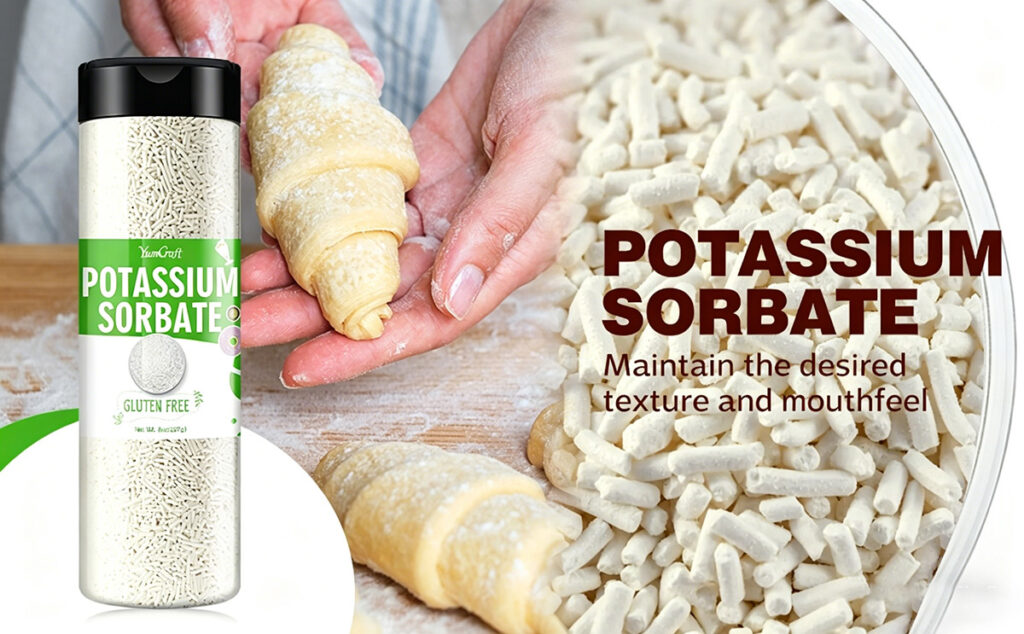
Potassium Sorbate vs. Calcium Propionate: Efficacy & Application
- Broader antimicrobial spectrum: While calcium propionate mainly inhibits molds and specific bacteria, potassium sorbate provides comprehensive protection against molds, yeasts, and a wider range of spoilage microbes.
- No flavor interference: Calcium propionate can leave a slightly cheesy or acidic taste. Potassium sorbate maintains the sensory integrity of bread, cakes, and pastries.
- Versatility beyond baking: Potassium sorbate excels in dairy (yogurt, cheese), wine, dried fruits, and ready-to-eat meals—applications where calcium propionate is ineffective or unsuitable.
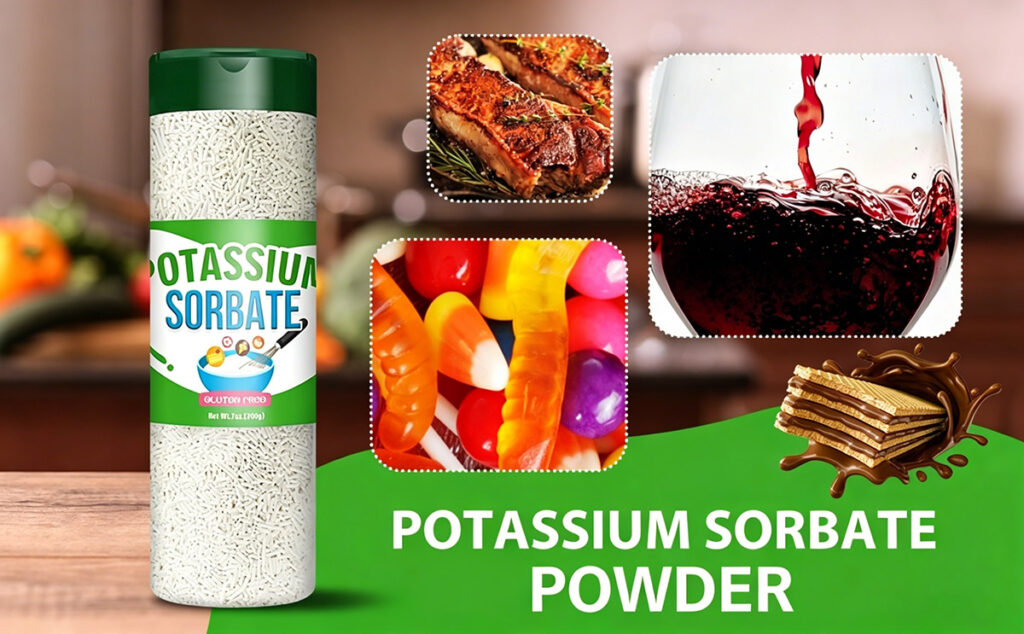
Additional Advantages Over Other Preservatives
- Exceptional regulatory acceptance: Approved globally by the FDA, EFSA, and Codex Alimentarius with high acceptable daily intake (ADI: 0–25 mg/kg body weight).
- Thermal stability: Retains potency during baking, pasteurization, and other heat processes.
- Clean-label compatibility: Perceived as a “milder” preservative, aligning with consumer demand for less intimidating ingredient lists.
Real-World Applications of Potassium Sorbate
- Wine & cider: Prevents secondary fermentation and spoilage without affecting flavor or aroma.
- Dairy products: Protects yogurt, cream, and processed cheeses from mold growth while maintaining creamy textures.
- Baked goods: Extends freshness of cakes, pastries, and gluten-free breads (where traditional preservatives often fail).
- Dried fruits & nuts: Inhibits mold during storage without altering natural flavors.
- Condiments & sauces: Preserves soy sauce, vinegar, and salad dressings effectively across varying pH levels.
Proxima opinion
References
- Guynot, M. E., Ramos, A., Sanchis, V., & Marín, S. (2003). Study of benzoate, propionate, and sorbate salts as mould spoilage inhibitors on intermediate moisture bakery products of low pH (4.5–5.5). Food Microbiology, 20(5), 483–490.
- Lara, M., & Casagrande, D. R. (2015). Effects of potassium sorbate and sodium benzoate at two application rates on fermentation and aerobic stability of maize silage. Asian-Australasian Journal of Animal Sciences, 28(12), 1732–1738.
- Martínez-Culebras, P., et al. (2024). Comparing the activity and interactions of the antifungal protein PeAfpA with conventional fungicides and food preservatives against mycotoxigenic fungi. International Journal of Food Science & Technology, 59(12), 9326–9336.
- EFSA Panel on Food Additives and Nutrient Sources Added to Food (ANS). (2015). Scientific Opinion on the re-evaluation of sorbic acid (E 200), potassium sorbate (E 202) and calcium sorbate (E 203) as food additives. EFSA Journal, 13(8), 4239.
- Sofos, J. N., & Busta, F. F. (1993). Antimicrobial activity of sorbates. Journal of Food Protection, 56(1), 68–78.
- Piper, P. W., & Piper, D. (2017). Weak acid preservatives: mode of action and resistance mechanisms. Advances in Applied Microbiology, 98, 1–34.